Tax for creators, worked out from your bank statement
Making money from YouTube, TikTok, Twitch, Patreon or brand deals? Payouts land in your everyday account next to your shopping, under names like Google Ireland Ltd. Debbie reads your bank statement, finds your payouts and the costs you can claim and shows roughly what you owe, so you can file your own tax return.
Self Assessment for creators in three steps
What you actually do in Debbie. Where we have a real screen from the app, it is shown.
-
1
Upload your bank statement
Export a statement from your banking app as a PDF, CSV, OFX or QIF and drop it into Debbie. It works on your everyday personal account, where most creators get paid. It treats a row as personal unless there is a reason to think it is business.
Editing and music subscriptions such as Adobe, CapCut, Canva or Epidemic Sound come through as costs. Everyday clothes, make up and hair stay personal, even if you wear them on camera.
-
2
Check your payouts
Platform payouts arrive after the platform has taken its share. Debbie spots money in from Google Ireland or AdSense, TikTok, Twitch, Meta, Patreon and Ko-fi and either books it as income or asks you to confirm it. A payment from a company that looks like a brand deal gets the same question instead of a guess.
It never quietly hides money in as personal, because leaving income out is the costly mistake.
-
3
Add the hours you work from home
Film, edit or stream at home? HMRC's flat rate lets you claim a set amount a month for the hours you work there, no bills or receipts needed: £10 for 25 to 50 hours, £18 for 51 to 100 hours and £26 for 101 hours or more. Log your months in Debbie and it adds up the year. GOV.UK: simplified expenses for working from home.
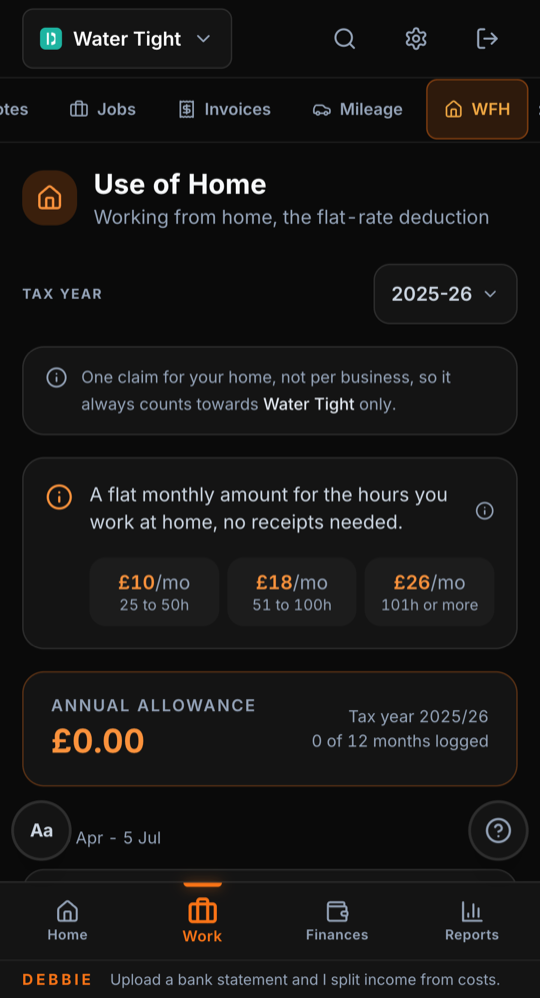
A real screen from a test account, before any months were logged.
YouTube, TikTok and Twitch payouts
However many platforms you earn from, they are added together. The £1,000 trading allowance is one allowance across all your trading income, not one per platform. GOV.UK: tax-free allowances on trading income.
Brand deals and gifted products
A brand paying you is income. So is a product you are sent to keep in return for promoting it, valued at what it would have cost you to buy. Debbie cannot see gifts in your bank statement because no money moves, so keep a note of what you were sent and what it is worth. GOV.UK: income from online platforms.
HMRC's own worked example
Brands paid you £700 to post review videos and sent you products worth £300 that you kept. Adverts on your videos paid £200. Your total income is £1,200.
That is over £1,000, so you need to tell HMRC. This example is HMRC's, not ours.
Source: HMRC: tax rules for content creators.
Making Tax Digital? Most people do not need it yet
Making Tax Digital only starts once your self employment and property money in, added together before costs, is over £50,000 from April 2026, £30,000 from April 2027 and £20,000 from April 2028. Until then, see your tax estimate and download your Tax Return Pack to file it yourself or have someone file it for you. If it does apply, Debbie connects to HMRC and sends your updates for you, only after you check the figures and tap to confirm. GOV.UK: check if Making Tax Digital applies to you.
Creator tax questions
Do YouTubers pay tax in the UK?
Money from YouTube adverts, TikTok, Twitch, Patreon and brand deals is trading income. If your trading income for the tax year (6 April to 5 April) is over £1,000, you need to tell HMRC, even if you think of it as a hobby. GOV.UK: income from online platforms.
Are gifted products taxable?
Yes, when you get them for promoting a brand. HMRC says to include the value of gifts or services you received from promoting products, using what they would have cost if you had paid for them. GOV.UK: income from online platforms and HMRC: tax rules for content creators.
Is the £1,000 trading allowance per platform?
No. It is one £1,000 allowance across all your trading income, so YouTube, TikTok, brand deals and any other side work are added together. It is measured before costs. You either take the £1,000 or claim your real costs, not both. GOV.UK: tax-free allowances on trading income.
Can I claim the clothes and make up I wear on camera?
Not everyday clothes. HMRC does not allow everyday clothing even if you wear it for work. Costumes used for entertaining or advertising your business can be claimed. Debbie treats everyday clothes, make up and hair as personal. GOV.UK: clothing expenses if you're self-employed.
When do I need to register for Self Assessment?
By 5 October after the end of the tax year you started. So if your content income went over £1,000 in the tax year ending 5 April 2026, you register by 5 October 2026. GOV.UK: register for Self Assessment.
See every feature Debbie has, for creators and everyone else, on the full feature list.
See the full feature list →Start your free month
Your first month is free, no card needed. Add a card only if you decide to stay.
Start your free month